Key facts
Last updated: 30 October 2026- Cost depends on system size, roof condition, cable runs, batteries and the grid connection
- System size is the biggest single driver and is modelled from your bills
- Older fibre cement roofs may need surveying, overcladding or re-roofing first
- Grid reinforcement costs, where needed, are set by the network operator
- Every quote is fixed, itemised and based on your own site survey
- Interest-free credit up to £30,000, subject to status
- Last updated: 30 October 2026
Why there is no single farm solar price
Two farms with the same roof area can end up with very different quotes, and the reason is that solar is not sold off the shelf. A dairy with heavy milk-cooling loads, a grain store with a seasonal dryer, and a mixed farm with a workshop all need different system sizes, different roof preparation and different electrical work. The only honest way to price a system is to survey the site and model it against the farm's actual electricity use.
That is why we do not publish generic per-kilowatt figures. They mislead more than they help, because they ignore the variables that decide whether a system works and what it costs to install. Instead, this page explains what shapes the price so you know what to expect when your quote arrives.
What shapes the cost of farm solar
System size and equipment
The array size, measured in kilowatt peak (kWp), is usually the largest cost driver. A bigger system needs more panels, more mounting rails, a larger inverter and more labour. We size the system to your daytime demand first, then check the roof can hold it. Oversizing to fill a roof only makes sense if you can use or export the surplus. Read our farm solar sizing guide for how that works.
Roof condition and structure
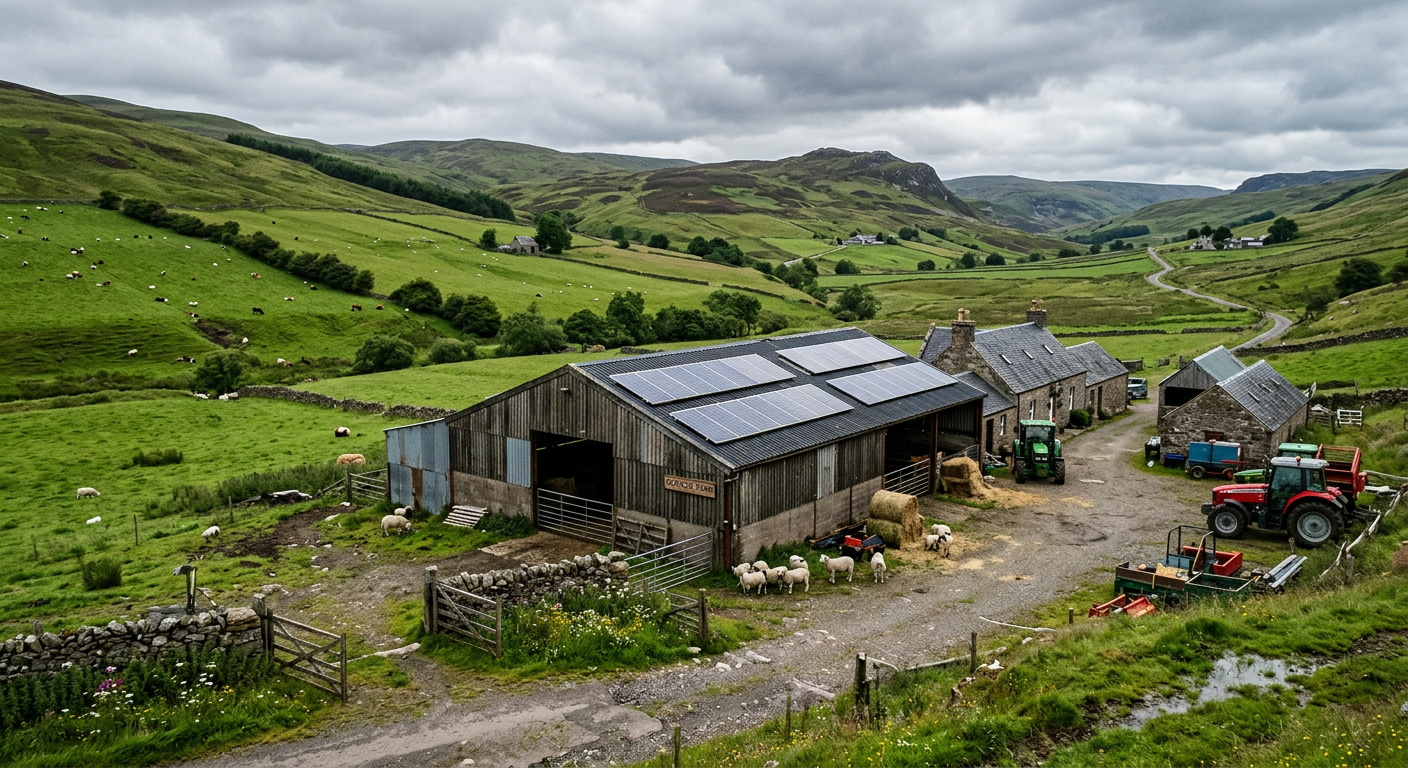
A sound, modern profiled-metal roof is the simplest and cheapest to fit. Many Scottish farm buildings have older fibre cement or asbestos cement sheeting that is fragile and may not carry extra load. Those roofs can need a structural survey, overcladding with new sheeting, or a full re-roof before panels go on. Any preparation work is priced separately and set out clearly in your quote.
Cable runs and electrical work
The distance from the array to your main distribution board affects cost. Long cable runs across a farmyard need larger cables to avoid voltage drop, and may require trenching or overhead routing. If your board is full or outdated, a new consumer unit or sub-board may be needed. We inspect all of this at survey.
Battery storage and the grid connection
Adding battery storage increases the upfront cost but can raise the share of solar you use on site, which is where the real value lies. Whether a battery is worth including depends on when you use electricity. We model your usage against expected generation before recommending one, and if the numbers do not support it, we will say so.
Most farm systems need a G99 application to the network operator, and that process is part of the project. If the local grid has limited spare capacity, the operator may require reinforcement or offer an export limit. Reinforcement costs are set by the network operator, not by us, and we flag any likely grid costs in your quote so there are no surprises. See our farm solar finance guide for how to pay for the system.
How to get an accurate price
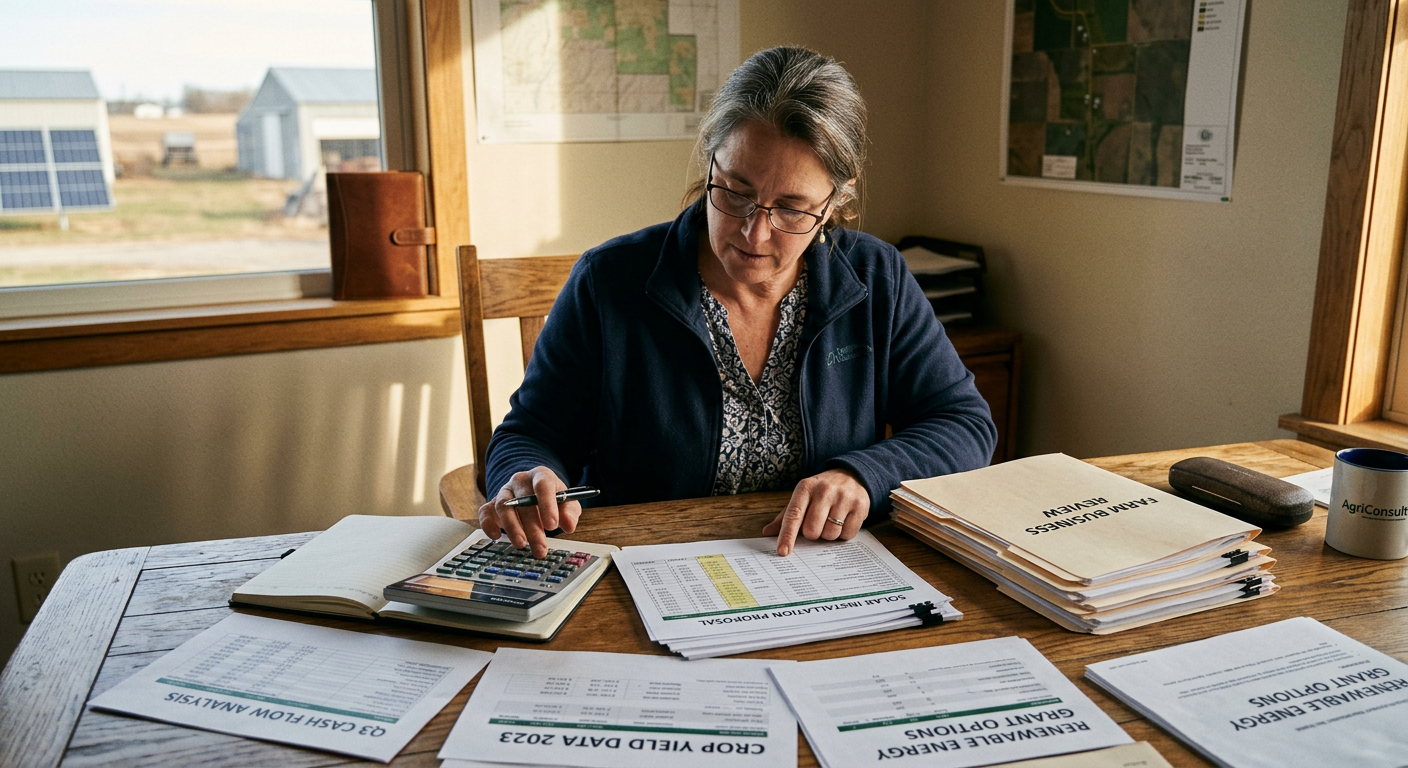
The most useful starting point is your latest electricity bill. From that we can model system size and expected generation, then survey the roof, structure and supply before issuing a fixed, itemised quote. You receive the equipment list, the work included, the grid application and any roof preparation, all priced out. Nothing is left vague.
Every quote is fixed: if something changes, such as adding a battery or adjusting the array, we reissue the quote in writing before you commit to anything.
Next steps
For more answers, visit Scottish Energy Efficiency for a wider set of energy questions, or read our guide to sizing farm solar panels in Scotland.