Key facts
Last updated: 30 October 2026- Solar suits farms, rural properties and businesses with daytime electricity demand
- Solar on agricultural and commercial roofs is usually permitted development in Scotland
- Ground-mounted arrays often need planning permission
- Commercial systems are larger and usually three-phase; domestic systems are smaller
- Older rural roofs need a structural survey before fitting panels
- Holiday lets, farm shops and estates can all benefit from solar
- Last updated: 30 October 2026
Which properties suit solar
Solar works for a broad range of rural properties, not just working farms. What matters is a sound, reasonably unshaded roof or a suitable piece of land, and enough daytime electricity demand to use what the panels generate. If you have both, solar is worth looking at regardless of whether the property is a dairy, a workshop, a holiday let or an estate office.
The common thread is self-consumption: electricity you use on site replaces power you would otherwise buy at your full unit rate. Properties with steady daytime demand get the most value. Those whose heaviest use falls at night benefit less, unless a battery is added to shift solar into the evening.
Farms and agricultural buildings
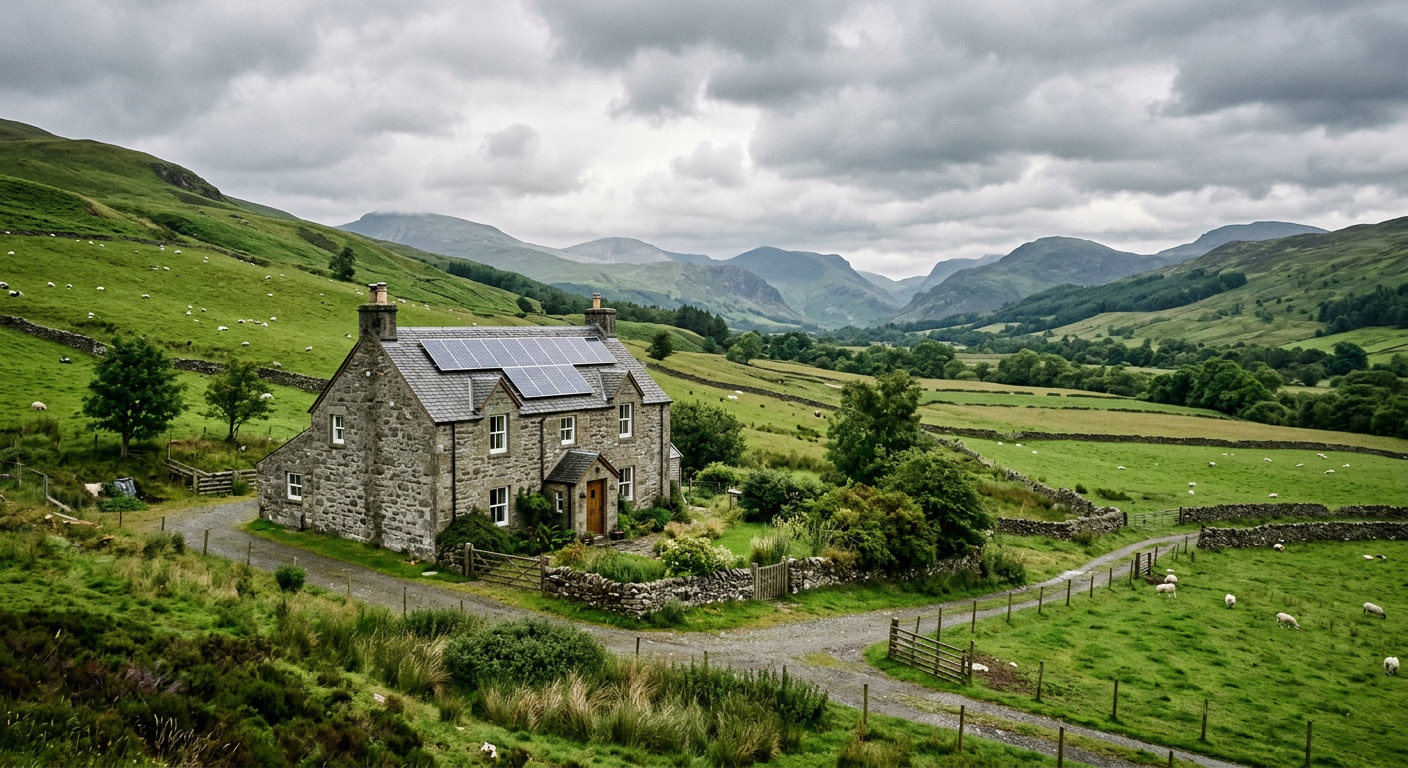
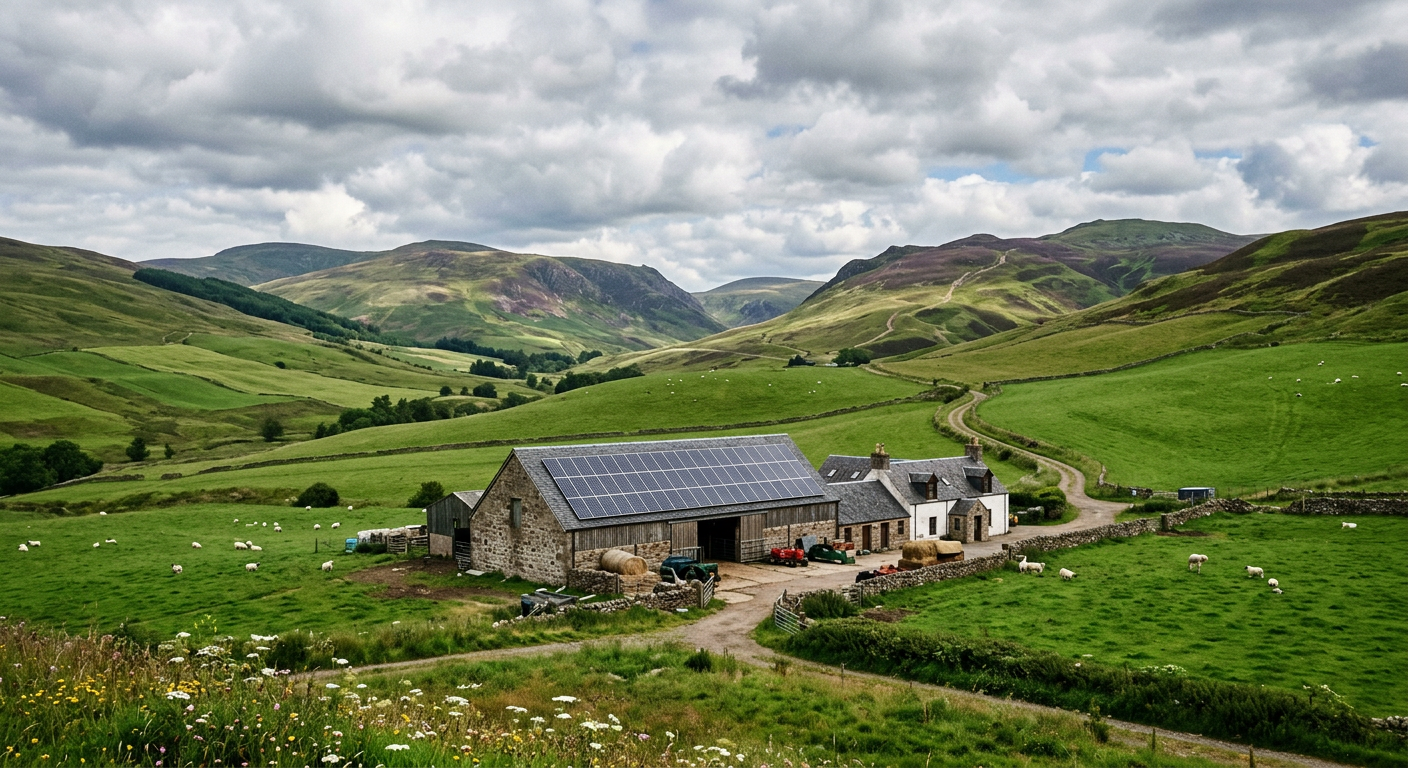
Dairies, grain stores, livestock units and mixed farms all use electricity differently, and we size each system around the specific loads. Steel-framed livestock and machinery sheds are often the simplest roofs to fit. Older buildings with fibre cement or asbestos cement roofs need a structural survey and may require overcladding first. Read our farm solar sizing guide and our guide to solar on agricultural roofs for the detail.
Commercial and business premises
Warehouses, workshops, factories, offices, garages and retail units often have large unshaded roofs and steady demand during working hours. That combination suits solar well, because most of the electricity is used on site as it is generated. Commercial systems are usually larger and three-phase, and the design, grid application and finance options differ from a domestic install. See our business and farm solar guide for more.
Rural properties, holiday lets and diversified farms
Farmhouses, cottages, holiday lets, farm shops, cafes and rural venues often sit at the end of long overhead lines. Solar and batteries can cover daytime use and help with evening demand. Holiday lets and farm shops with refrigeration, lighting and heating running through the day line up particularly well with solar generation. A battery can extend the benefit into the evening when guests or customers are still on site.
Estate properties with multiple buildings can often install solar across several roofs, sizing each array to the demand of the activity beneath it. We survey the whole site and identify the best roofs or land before designing a coordinated system.
Commercial versus domestic solar
The distinction matters for design, not just for the equipment. Commercial systems are larger, usually three-phase, and sized to business demand and roof area. They need a G99 grid application in most cases, and the finance and tax treatment is different. Domestic systems are smaller, typically single-phase, and sized to a household. The underlying technology and safety standards are similar, but the project is designed around the property type and its usage.
Planning permission and permitted development
Solar on agricultural and commercial roofs is usually permitted development in Scotland, subject to conditions on panel height, projection beyond the roofline and listed buildings. Ground-mounted arrays are assessed differently and often need planning permission, especially above certain size thresholds. Properties in conservation areas or national parks, and listed buildings, have additional restrictions. We check the planning position for your site before you commit to anything.
Older buildings: many rural roofs are fibre cement or asbestos cement and classed as fragile. We survey the roof covering, purlins and frame before designing anything, and we will say if a roof is not suitable.
Next steps
Send us your latest electricity bill and tell us about the property. We assess the roof or land, the electrical supply and the grid connection, and give you a fixed written quote. For more answers, visit Scottish Energy Efficiency for a wider set of energy questions.