Key facts
Last updated: 30 October 2026- Solar sized from your actual electricity bills and usage pattern
- Roofs, land and battery storage assessed in one survey
- Permitted development on farm buildings in most cases
- Site-specific generation estimate using the MCS method
- East-west layouts suit dairy milking times; south gives highest annual yield
- We install through MCS-certified partners
- Last updated: 30 October 2026
Start with how your farm uses electricity
Every kilowatt hour of solar you use on the farm replaces one you would otherwise buy at the full commercial unit rate. Exported electricity earns far less. That is why sizing starts with your half-hourly or monthly usage, not with the size of your biggest shed. The useful questions are when you use power, how much of it falls in daylight hours, and whether that changes through the year.
- Dairy: milking, vacuum pumps, milk cooling and water heating create steady morning and evening peaks, with cooling running through the day.
- Arable: grain drying and storage fans create heavy late-summer and autumn loads that line up well with solar.
- Livestock and mixed: lighting, ventilation, water pumps and workshops give a lower but year-round base load.
- Diversified farms: holiday lets, farm shops, cold stores and EV charging add daytime demand that solar can cover.
How we size a system
We do not work from rules of thumb. A dairy with heavy milk cooling, a grain store with a dryer and a mixed farm with a workshop all need different designs. Your bills, your supply capacity and the grid connection decide the final size, and we explain the reasoning in your quote.
Generation estimates: every quote includes a site-specific estimate calculated using the MCS method, allowing for your location, roof orientation, pitch and shading.
Choosing which building to use
Roof orientation and pitch
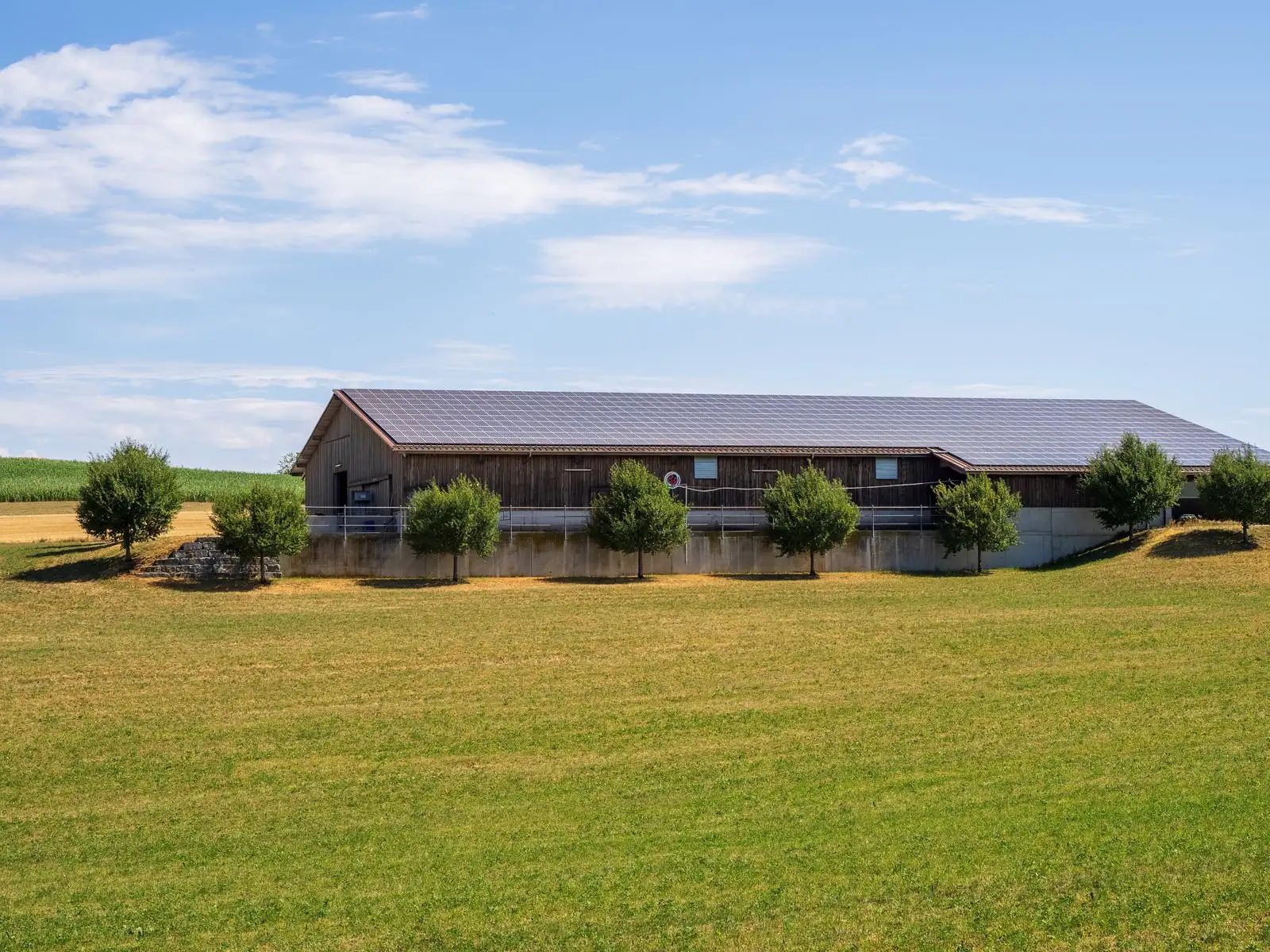
South-facing slopes give the highest annual yield, but east and west slopes lose less than many people expect and spread generation across the day. For dairies, an east-west layout often matches milking times better than a single south-facing array.
Roof condition and structure
Older barns often have fibre cement or asbestos cement sheeting, and some purlins were never designed for extra load. We check the roof covering, fixings and structure before designing anything. Our guide to solar on agricultural and fragile roofs explains the options.
Distance to the supply
Cable runs from a remote shed to the main distribution board add cost and voltage drop. The building closest to your main supply is often the best first choice, even if a larger roof sits further away.
When a roof is not the answer
If no roof is suitable, or demand is larger than the roof can meet, a field array may work better. See our guide to ground-mounted solar on farmland. If your demand peaks before dawn or after dusk, a battery can shift solar into those hours; our farm battery storage guide explains when it helps.
What happens at the survey
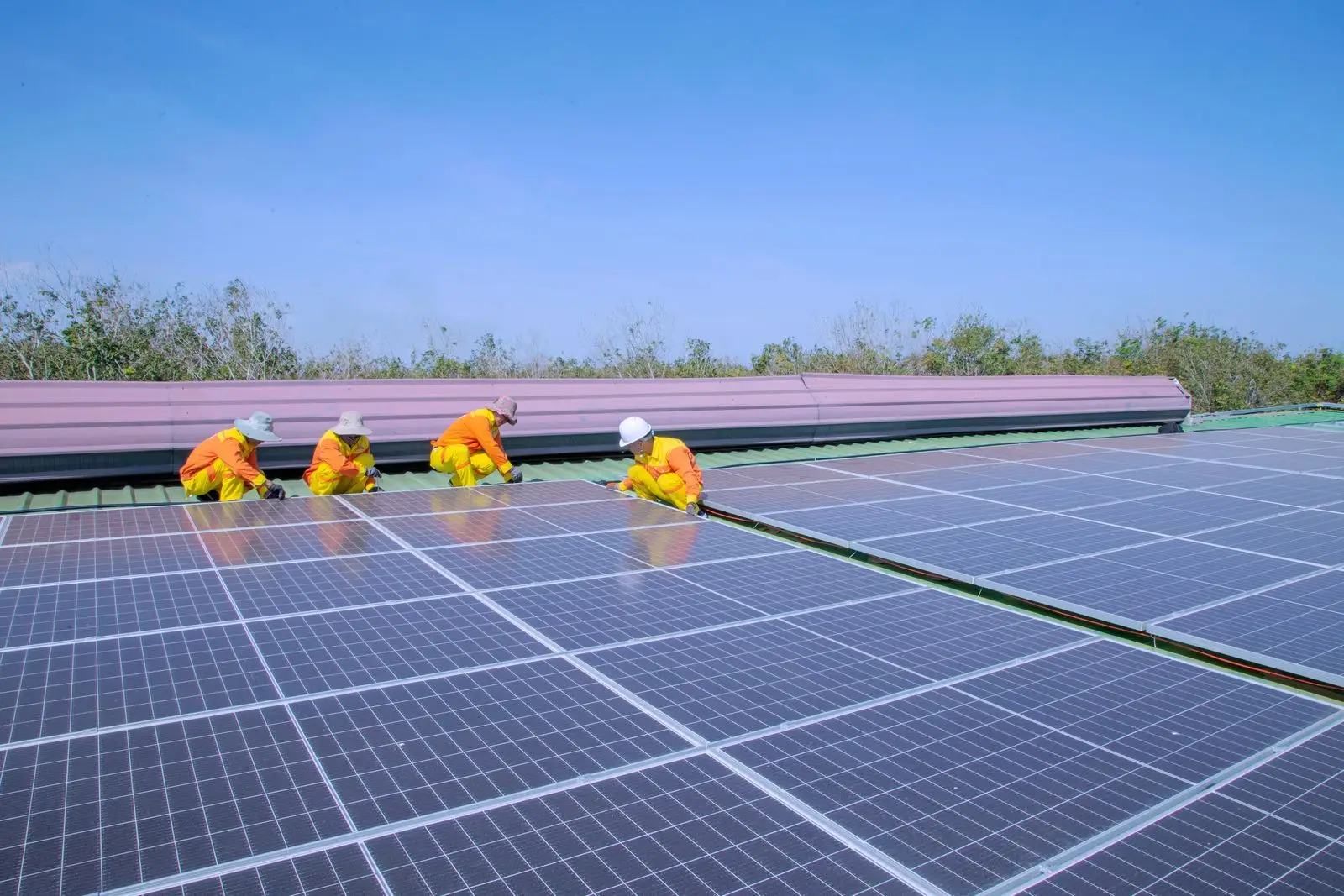
We review your electricity bills, check the roof, structure and shading, inspect your incoming supply and distribution board, and confirm whether a G98 or G99 grid application is needed. You then receive a fixed-price quote and a realistic generation estimate. For ways to pay for it, see farm solar finance, and for quick answers, our farm solar FAQ.