Key facts
Last updated: 30 October 2026- Use an installer who works with MCS-certified partners
- A proper quote follows a site survey, not a phone estimate
- Compare itemised quotes, not just the bottom line
- Check who carries out the work and what warranties apply
- The installer should handle the G98 or G99 grid application
- Safe access to fragile roofs should be planned before work starts
- Last updated: 30 October 2026
Why the installer matters as much as the panels
A solar system is a long-term investment that sits on your roof or in your field for decades. The equipment matters, but so does the quality of the design, the installation and the paperwork. A well-installed system on the right roof, sized to your actual demand, will outperform a larger array fitted poorly or sized to fill a roof rather than to your usage. Choosing the right installer is the first and most important decision.
MCS certification
MCS, the Microgeneration Certification Scheme, is a quality standard for small-scale renewable installations in the UK. It covers product and installation quality, and ensures that systems are properly documented and commissioned. We do not claim MCS certification for ourselves. We install through MCS-certified partners who survey, design and fit each system and handle commissioning and the grid paperwork.
When comparing installers, ask specifically who carries out the work and what certifications they hold. The answer should be clear and in writing. See our farm solar sizing guide for how a properly designed system is built around your demand.
What to look for in a quote
A proper quote follows a site survey, not a phone call. Without seeing the roof, the structure, the shading and the electrical supply, any price is a guess. When you receive quotes, compare them line by line rather than by the total at the bottom. Look for what is actually included.
- Equipment: panel make and model, inverter specification, battery if included, with warranties listed.
- Roof work: structural survey, overcladding or re-roofing if needed, and safe access planning.
- Electrical work: cable runs, distribution board upgrades, and the connection to your supply.
- Grid application: who prepares and submits the G98 or G99, and any likely network costs.
- Fixed price: the quote should be fixed and itemised, not an estimate subject to change.
A cheaper quote can be cheaper because it leaves out structural work, cable runs or the grid application. An itemised quote lets you see exactly what you are paying for and compare like with like. Read our guide to solar on agricultural roofs for why roof condition matters so much.
Questions to ask before you commit
- Who carries out the installation, and what certifications do they hold?
- Is the quote fixed and itemised, and does it include roof preparation and the grid application?
- What warranties apply to the panels, the inverter and the battery, and who backs them?
- How is safe access planned, especially on older or fragile roofs?
- How is the system sized, and is the generation estimate specific to my site?
- What happens after installation, and is monitoring included?
A clear answer to each question is a good sign. If an installer is vague about who does the work, what is included, or how they handle the grid, that is a reason to look elsewhere.
Roof safety and site access
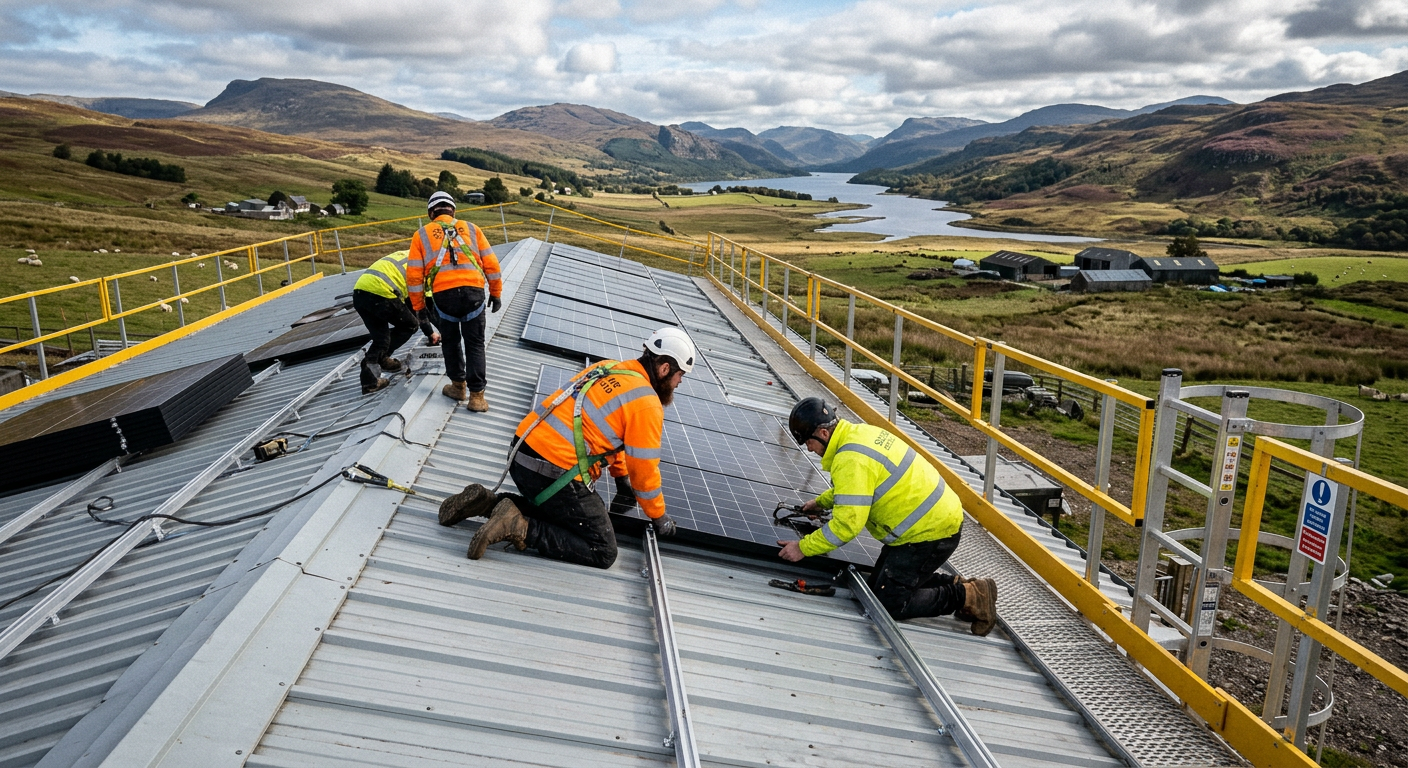
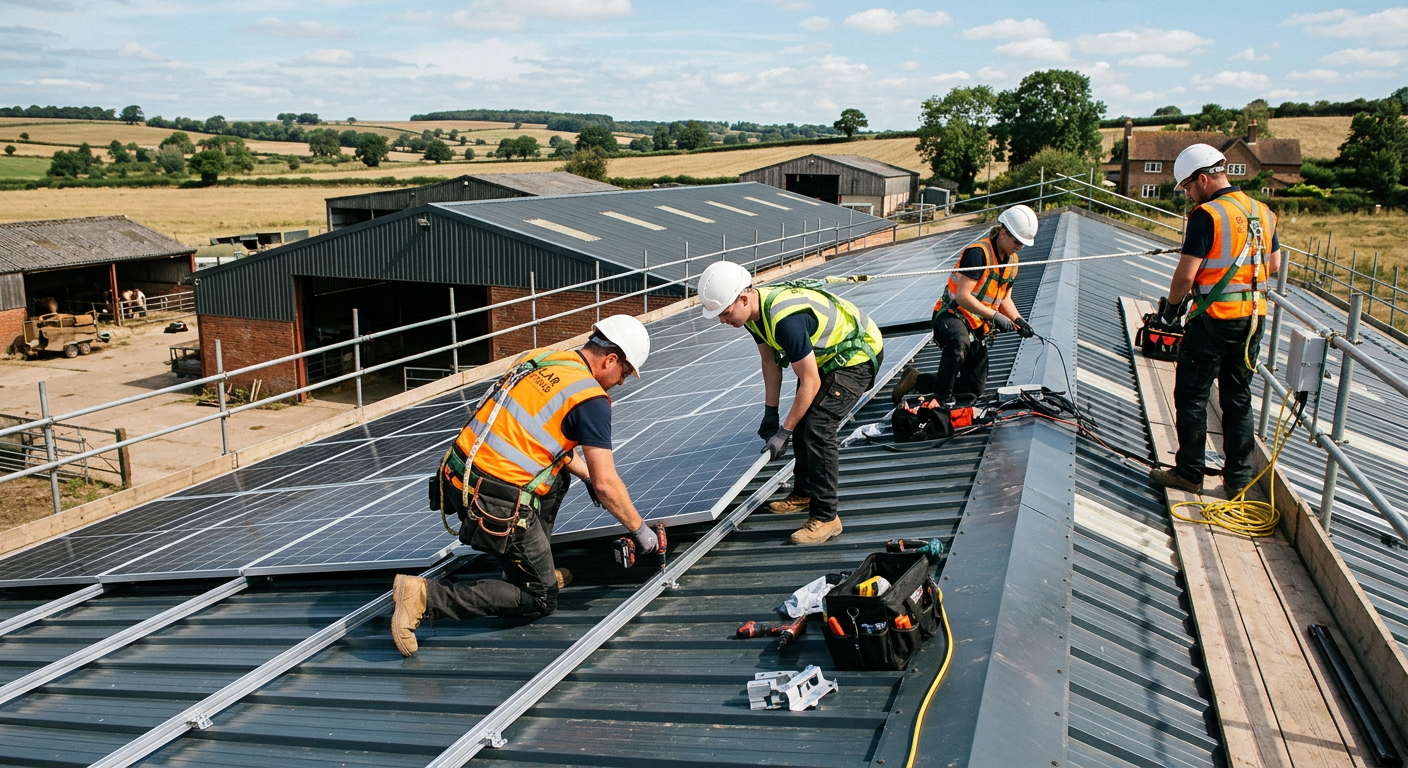
Many Scottish farm and rural roofs are fibre cement or asbestos cement and classed as fragile. Falls through fragile roofs are one of the most common causes of serious injury in agriculture. A responsible installer plans safe access under HSE guidance, with edge protection, fall-arrest systems and crawl boards, before any work starts. If a roof cannot be worked on safely, the installer should say so and suggest an alternative, such as a ground-mounted array.
The grid connection is the other area where experience matters. Most farm systems need a G99 application to the network operator, and a good installer prepares and submits that on your behalf, dealing with any questions or conditions.
How we work
We start with your electricity bill, survey the site, and send a fixed, itemised quote with a site-specific generation estimate. We install through MCS-certified partners, handle the grid application, and plan safe access for every roof. Your quote sets out who does the work, what is included, and what warranties apply.
For more answers, visit Scottish Energy Efficiency for a wider set of energy questions.